
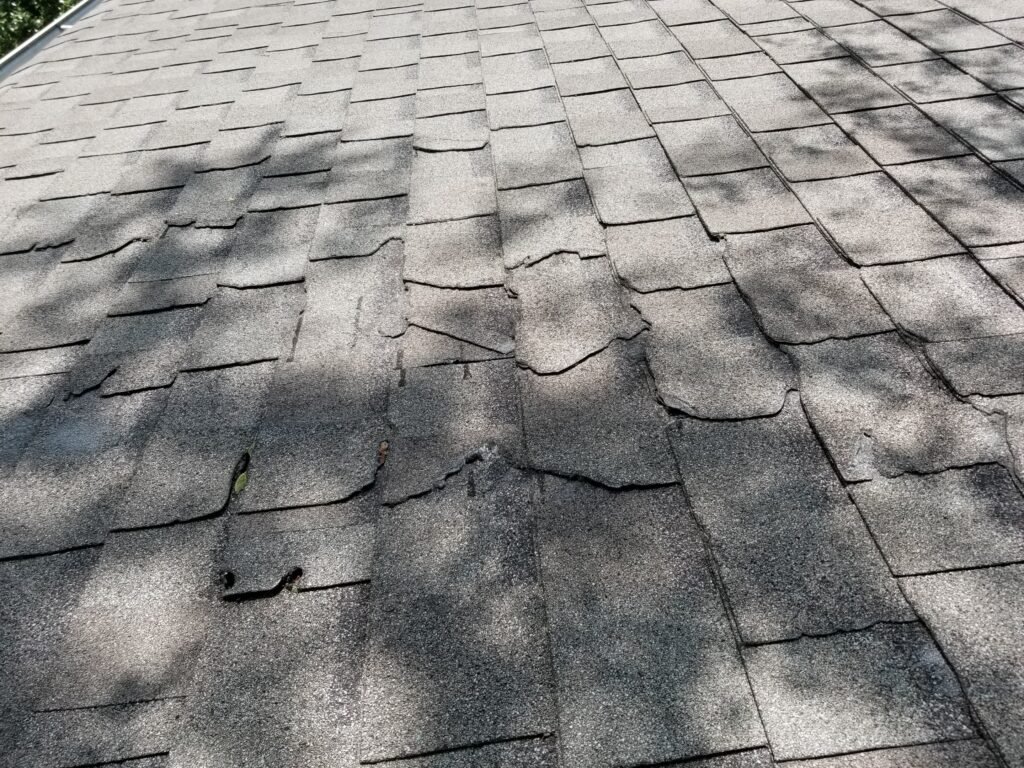

After a storm in Northeast Indiana, start with safety, a record of what you can see, and a roof inspection. You do not need to decide immediately whether the roof needs repair or replacement. First, establish what changed and whether the home needs temporary protection.

Photo: Samuel Bolton, Wikimedia Commons, CC BY-SA 4.0. Image unchanged.
1. Wait until it is safe to look
Keep monitoring local weather alerts; another storm may follow. Once the threat has passed, look from a safe location on the ground. Stay away from fallen power lines, damaged trees, hanging branches and unstable structures. Leave roof access and tarp installation to trained professionals. If there is an immediate danger, contact emergency services rather than waiting for a roofing appointment.
2. Record what you notice
Start a simple storm file on your phone. Photograph the home from several safe viewpoints, then record visible changes such as missing shingles, debris, displaced gutters or a new ceiling stain. Note the date of the storm and when you first noticed each problem. Keep your original photographs and any older roof pictures for comparison.
Describe observations plainly: “New stain above the upstairs window” is more useful than guessing the cause. A stain appearing after rain deserves attention, but an inspection is needed to investigate where the water entered.
3. Arrange temporary protection when needed
If water is entering, call a qualified contractor and describe the active leak. Ask what temporary work is appropriate and when someone can safely attend. Keep estimates, invoices and receipts together. Temporary protection and a permanent repair are separate decisions; ask for the purpose and limits of each proposed measure.
4. Contact your insurer if you believe there is covered damage
Ask your insurer what notification deadlines, documentation and inspection steps apply to your policy. Indiana’s Department of Insurance recommends photographing damage before temporary repairs when possible, keeping receipts and allowing the insurer to inspect before permanent repairs. Coverage, deductibles and reimbursement depend on your policy and the insurer’s decision. A contractor’s inspection is not an approval of a claim.
5. Ask for a clear roof assessment
Request photographs, an explanation of the affected areas and a written scope of the recommended work. Useful questions include: Is the problem localized? What needs attention now? What can be monitored? Why is repair or replacement being recommended?
For homeowners in Fort Wayne, Decatur, Berne and surrounding Northeast Indiana communities, our storm-damage service page explains the next step. You can also read what hail damage can look like before your appointment.