
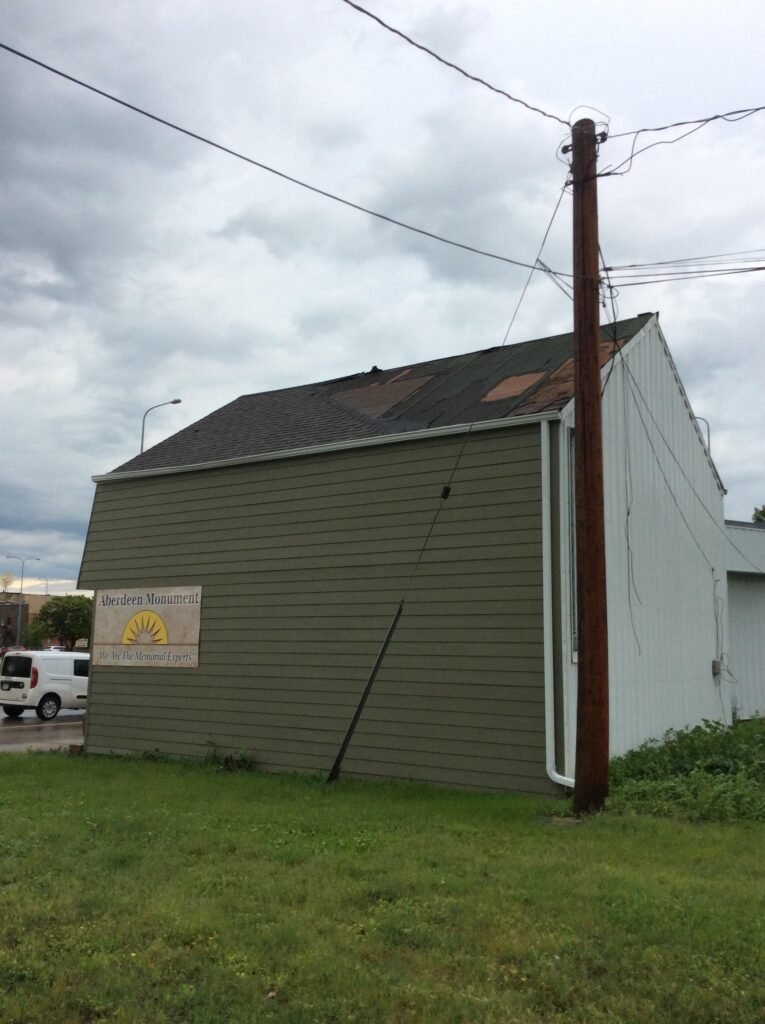
Missing shingles are an obvious reason to arrange an inspection after high winds. Other changes can be less visible. This guide helps Northeast Indiana homeowners identify concerns from the ground and ask useful questions without climbing onto the roof.
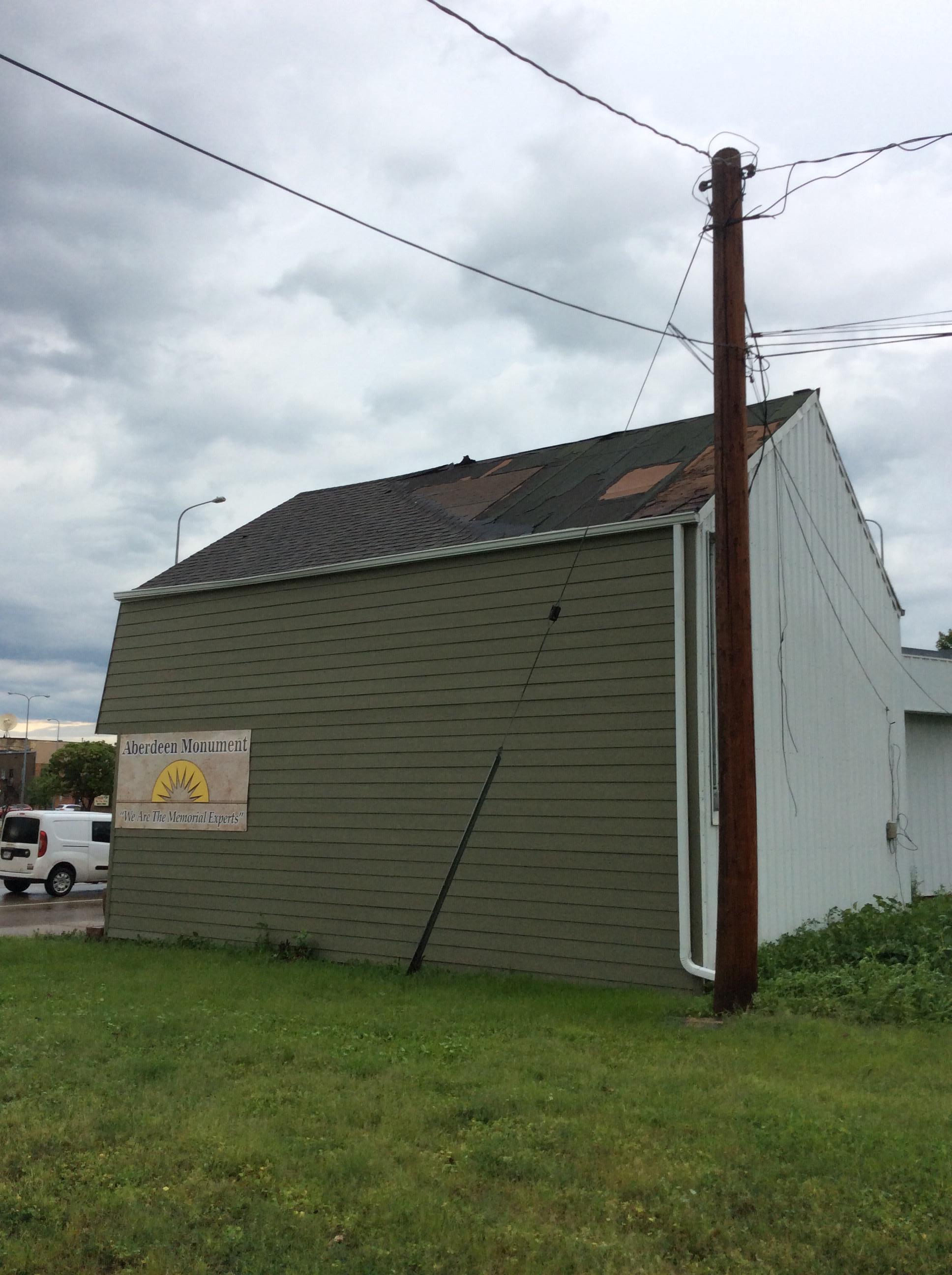
Photo: NOAA / National Weather Service Aberdeen. Display cropped to emphasize the roof.
What wind can do to shingles
Roofing manufacturer GAF explains that wind can lift shingle edges, loosen their seal and leave creases, even when shingles remain attached. Look for new gaps in the roof covering, raised edges or shingle pieces in the yard. These observations are reasons to investigate; they do not establish the age, cause or full extent of damage by themselves.
Look beyond the roof surface
From a safe viewpoint, note displaced gutters, loose exterior trim and fallen branches. Indoors, record new ceiling or wall stains and where you first saw moisture. GAF lists interior staining as a possible indication of a roof leak. Tell the inspector about both exterior changes and interior symptoms so they can assess the roof as a system.
A ground-level check has limits
A roof can look normal from the driveway while details remain out of view. Equally, debris in the neighborhood does not prove that your roof needs replacement. Ask the inspector to distinguish what was observed, what could not be accessed and what still needs investigation. Avoid anyone who promises a new roof before assessing the property.
Questions to ask after the inspection
- Which areas are affected, and can you show me photographs?
- Is there an active opening or another issue needing temporary protection?
- What repair is proposed, and why is that approach appropriate?
- If replacement is recommended, what makes a localized repair unsuitable?
- What is included in the written scope, and what remains uncertain?
Request a clear explanation in everyday language. A useful recommendation should connect the observed condition to the proposed work, rather than relying only on the fact that a storm occurred.
Prepare for your appointment
Have the property address, approximate storm date, roof age if known, previous repair records and photographs ready. Mention active leaks when scheduling. Keep a short timeline of what changed and any actions already taken; this helps avoid repeating the same history during every conversation.
If the storm has just passed, begin with our post-storm checklist. For the next decision, read our repair-versus-replacement guide or learn about storm-damage inspections in Northeast Indiana.