

A roof leak after heavy rain needs attention even if the dripping stops when the weather clears. Keep people away from wet electrical fixtures and sagging ceilings, protect belongings only where it is safe, and arrange an inspection. Do not climb onto a wet roof to find the source.
For homeowners in Fort Wayne, Berne, Decatur and nearby Northeast Indiana communities, this guide explains what to document, why a roof may leak only in heavy rain, and what a repair assessment should cover.
What to do first when your roof leaks
- Check for immediate hazards. Stay out of areas with a bulging ceiling, falling material or water near electrical equipment. Do not touch wet fixtures, switches or appliances. Seek emergency help if there is an immediate danger.
- Limit damage without putting yourself at risk. Move furniture and valuables away from the affected area when safe. A container can catch a small drip on a stable floor, but do not stand beneath a sagging ceiling or try to puncture it.
- Document the leak. Take photos from a safe location. Note when rain started, when you noticed water, the affected rooms and whether wind seemed to change the leak.
- Contact a roofing professional. Explain whether water is actively entering and whether you can see damaged or missing shingles from the ground. Ask about availability and whether temporary protection is appropriate.
For an active leak, call On Time Exteriors at 260-234-3055 to discuss availability. An online appointment request is not a guarantee of immediate emergency service. If there is no immediate hazard, you can schedule a roof inspection.
Why does a roof leak only during heavy rain?
Heavy rain can expose an existing weak point that light rain does not reveal. Wind-driven rain may enter vulnerable openings, and greater runoff can reveal drainage problems. The timing is useful evidence, but it does not prove that the latest storm caused the defect or identify the exact repair.
A roof is a connected system of shingles or other roofing materials, flashing, underlayment, penetrations and drainage details. The roofer needs to investigate how those parts meet rather than simply covering the spot nearest an indoor stain.
Flashing around chimneys, walls and skylights
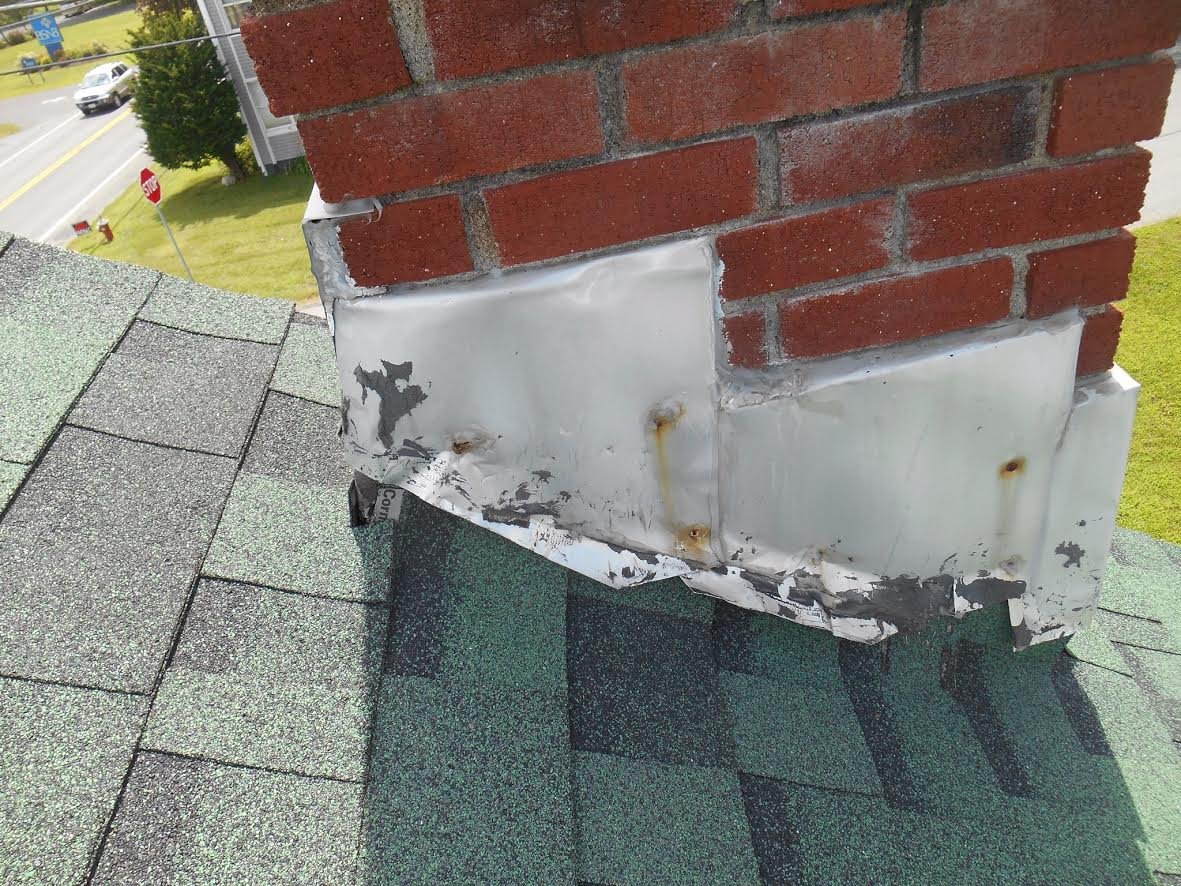
Flashing directs water away from roof transitions and openings. Damaged or poorly integrated flashing around a chimney, wall or skylight can provide a leak path. Sealant may be part of a detail, but adding surface caulk is not a substitute for diagnosing an underlying flashing problem.
Roof vents and pipe boots
Plumbing vent pipes and other roof penetrations need weather-resistant details where they pass through the roof. Cracks, deterioration or separation around a pipe boot or vent are possible leak points. A professional inspection should check the surrounding shingles and flashing, not just the visible sealant.
Damaged, lifted or missing shingles
Missing shingles are worth documenting from the ground, but not every leak has an obvious bare patch. Lifted edges, creases or damage near a roof transition may need closer inspection. Our wind-damage guide explains visible warning signs without asking you to climb onto the roof.
Roof valleys, gutters and concentrated runoff
Roof valleys collect water from adjoining slopes. Debris or problems in the valley details can affect drainage. Clogged gutters and poorly draining roof edges also deserve attention during an inspection. Gutters that overflow are not proof of the indoor leak source; the contractor should check how water moves through the specific area.
Why the ceiling stain may not be below the leak
Water can travel along roof decking or framing before reaching a ceiling. The location of the stain is a starting point for investigation, not a reliable map of the entry point. Tell the contractor whether the mark grows during rain, appears later or returns after different weather conditions.
If the attic has safe, normal access, describe anything you have already noticed, such as damp insulation or stained wood. Do not enter an unsafe attic, step on ceiling drywall, disturb wiring or climb into tight spaces to investigate. A professional can decide what access and protective measures are needed.
Moisture is not always a roof leak. Condensation can produce similar signs, and other water sources may need to be ruled out. Matching the indoor evidence with exterior conditions is more useful than assuming every stain requires new shingles.
What to photograph and tell your roofer
- The affected ceiling or wall, plus a wider view showing its location in the room.
- The time you first saw water and whether the leak occurred during or after heavy rain.
- Previous leaks, repairs or recurring stains in the same area.
- Visible shingles, flashing or debris photographed from the ground.
- Gutter overflow or unusual water flow visible from a safe position.
- The approximate roof age, if known, and recent work near the roof or attic.
You do not need to identify the cause before calling. Keep the original photos and notes so they can be compared with the inspection findings.
Temporary protection versus a permanent roof repair
A temporary measure is intended to limit further entry while a permanent repair is arranged. It does not automatically fix damaged components or wet materials inside the house. Ask who will provide temporary protection, what it includes and when follow-up work is expected.
Do not install a tarp yourself on a wet, steep or storm-damaged roof. Safe access and weather conditions matter. Likewise, avoid treating a random sealant patch as a confirmed repair. The permanent scope should identify the leak source, the components being corrected and any limitations caused by adjacent aging materials or concealed conditions.
Our roof repair services focus on evaluating localized problems and explaining whether targeted work is reasonable. Water-damaged interior materials may need separate assessment after the source is addressed.
Does a leaking roof need to be replaced?
Not necessarily. A serviceable roof with an isolated flashing or shingle problem may be repairable. Widespread deterioration, repeated leaks or extensive damage may make roof replacement a more practical option. Ask the contractor to explain the condition of the surrounding roof and the expected benefit of each approach.
Compare a defined repair scope with a defined replacement scope. “Your roof leaks” is not, by itself, enough information to make that decision.
Questions homeowners ask after heavy rain
Can I wait if the dripping stopped?
Stopping when rain ends does not show that the problem is fixed. Document the condition and arrange an assessment before the next storm. If you notice worsening stains, sagging or electrical hazards, keep clear of the area and seek appropriate help.
Can a newer roof develop a leak?
Yes. The condition of flashing, penetrations and installation details matters as well as roof age. Have the source evaluated and keep any original installation and warranty documents available for review.
Should I clean the gutters during the storm?
No. Avoid ladder or roof work during rain, wind or lightning. Once conditions are safe, arrange maintenance or professional gutter inspection as appropriate. Clearing a blockage alone does not confirm that an indoor leak has been repaired.
How can I reduce future leak risk?
Arrange appropriate roof maintenance, keep drainage systems maintained and address observed defects promptly. A dated inspection record can help identify changes over time. No maintenance program can guarantee a roof will never leak.
Schedule a roof-leak inspection in Northeast Indiana
On Time Exteriors serves Fort Wayne, Decatur, Berne and surrounding communities. Tell us what happened, where you noticed water and whether the leak is active. We can discuss the next step and inspection availability.
For broader storm concerns, see what to do after roof storm damage.
Educational sources: GAF on identifying roof leaks, roof flashing, and attic condensation. These links do not imply manufacturer certification.