
Ice dam prevention in Fort Wayne, Indiana starts before the first roof leak. If a thick ice ridge returned along your eaves last winter, cleaning the gutters alone may not solve it. The useful question is why snow is melting on one part of the roof and freezing on another—and what needs attention before cold weather returns.
This guide helps homeowners separate a roof repair problem from an attic heat-loss problem, document warning signs safely, and ask for a practical inspection scope. For local roofing help, see our Fort Wayne roofing services.
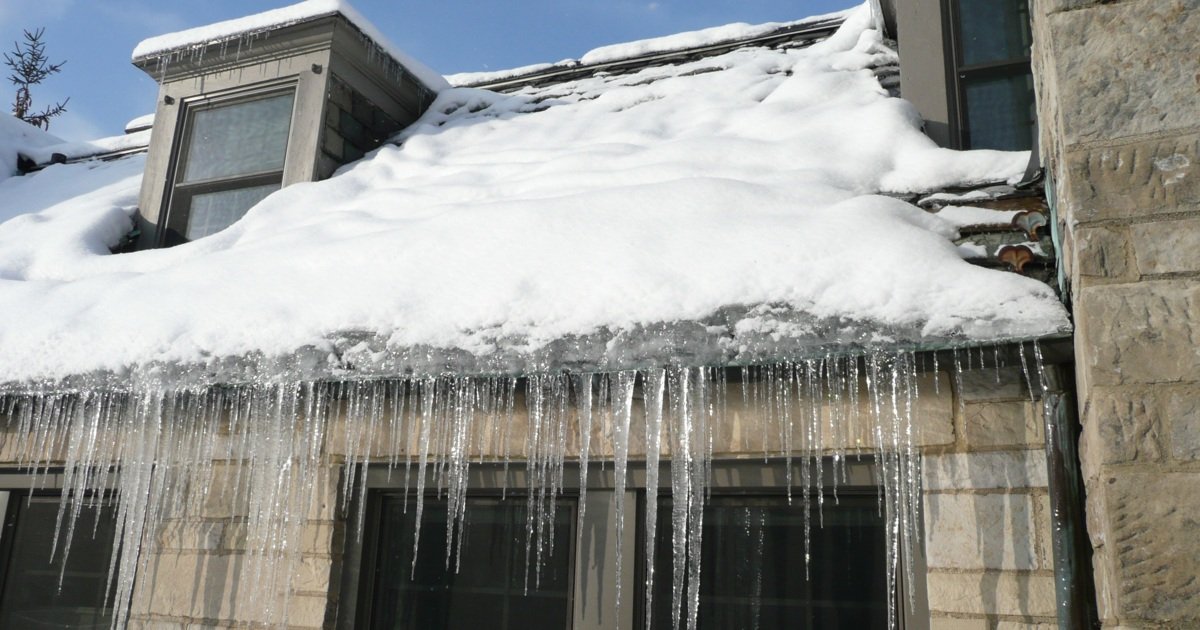
Illustrative roof near Cleveland, Ohio, not an On Time Exteriors project. Photo: Dmcroof / Wikimedia Commons, CC BY-SA 3.0. Cropped and resized; crop shared under the same license.

What causes ice dams on a Fort Wayne roof?
An ice dam is a ridge of ice along the edge of a roof that blocks drainage. Heat escaping from the living space can warm the roof deck and melt snow above it. Melted snow runs toward the colder eave, where it can refreeze. More water collects behind that frozen barrier and may work beneath the shingles.
The important temperature difference is across the roof surface. A thaw is not required for heat escaping from a house to melt snow on the roof. Fort Wayne homeowners should plan around the condition of their own roof and attic, rather than assume that a particular outdoor temperature makes the house safe from ice buildup.
The University of Minnesota Extension explains the heat-transfer mechanism and the importance of reducing heat loss. Its building-science guidance is useful here; Minnesota-specific code statements do not establish Indiana requirements.
Which warning signs deserve an inspection?
- A recurring ice ridge: note which eaves, valleys or dormers develop it and whether it returns in the same place.
- Uneven snow cover: bare patches beside snow-covered areas can be a clue worth photographing, although sunlight and roof geometry also affect melting.
- Interior changes: a new ceiling stain, peeling paint or water near an exterior wall needs investigation.
- Drainage trouble: record overflow locations and displaced gutter sections from the ground.
Icicles alone do not prove that water has entered the home. Conversely, an absence of dramatic icicles does not rule out a leak. Keep a short record of when the problem occurs: during snow cover, during thawing, or during rain without snow. That history gives the inspector a better starting point than “it leaks sometimes.”
Ice dam prevention for Fort Wayne, Indiana homes: a fall checklist
1. Find air leaks before adding insulation
Ask an energy professional to evaluate air leakage between the home and attic. Common inspection points include the attic hatch, wiring penetrations, plumbing openings and recessed light fixtures. The goal is a continuous air barrier, not simply a deeper pile of insulation hiding the same gaps.
Sealing around a chimney, flue or heat-producing fixture requires the right materials and clearances. Do not apply ordinary foam indiscriminately. The Building America Solution Center identifies ceiling air sealing as a priority, followed by appropriate insulation and roof-assembly ventilation.
2. Review the attic floor and eaves together
In a conventional vented attic, ask whether coverage is continuous, whether insulation has shifted, and whether the eaves have usable airflow paths. Adding material without checking the details can leave thin spots or obstruct intake vents. A finished attic or cathedral ceiling needs an assessment suited to that assembly.
Spray foam insulation is one possible material, not an automatic solution for every Indiana home. Ask the contractor to explain where the air and thermal boundaries belong, how moisture will be managed, and how the proposed work fits the existing construction. The Department of Energy’s attic insulation guidance also places air sealing before installing insulation.
3. Check drainage and ventilation without treating them as a cure-all
Have leaves and debris cleared so water can drain properly. Ask the roofer to check the condition of the eaves, flashing and intake/exhaust arrangement. Proper ventilation supports a suitable roof assembly, but another vent is not a substitute for correcting warm air leakage. Our gutter service information explains how drainage fits into exterior work.
4. Ask what protects the roof beneath the shingles
If replacement is already being discussed, ask where the proposed ice-and-water membrane will extend, how it ties into flashing, and which product instructions and local requirements apply. A leak barrier is a second line of defense; it does not stop the snow-melting cycle above it.
GAF’s ice-dam technical bulletin cautions that extreme backup can exceed protection. Request a written scope for your roof instead of assuming “ice shield included” explains every detail.
What if ice dams are causing roof leaks?
Keep people away from falling ice and the area beneath affected eaves. Photograph conditions from a safe position. If water is entering, protect belongings only where safe and arrange prompt professional assessment. Avoid wet electrical fixtures and a sagging ceiling; those conditions call for urgent help.
Do not climb onto a snowy roof or chip ice off with a hammer. A roof rake also needs careful use: roofing materials, overhead lines and falling snow make access important. Discuss a safe method with a qualified professional. The National Weather Service’s roof ice-dam guidance covers the relationship between snow accumulation and roof risk.
If you need someone to remove ice dams, confirm that the contractor actually offers ice dam removal, how the roof will be protected, and what access is required. Ask about specialist removal if water is actively backing up; the appropriate service and availability must be confirmed when you call.
Questions to ask at your Fort Wayne roof inspection
- What evidence points to an ice dam rather than a flashing defect or another leak source?
- Which parts of the roof and attic could you inspect, and which remain inaccessible?
- Does the recommendation address the cause, existing damage, or both?
- Should a separate energy or insulation specialist evaluate the home?
- What is included in the written scope, and what must be confirmed after safe access is possible?
Ask for photos tied to each recommendation. A useful report separates observed conditions from suspected causes. It should also explain whether targeted roof repair is reasonable or whether broader deterioration justifies discussing replacement.
Will a new roof stop ice dams?
Not by itself. New shingles and properly installed protective layers may address roofing defects, but they do not automatically correct the attic conditions that feed repeated melting. Before authorizing a replacement solely because of ice dams, ask how the plan handles the underlying heat transfer.
Plan your next step before the winter months
For a Fort Wayne property with recurring ice at the eaves, start with last season’s photos, the location of any interior stains, and a list of earlier repairs. That gives the local team a concrete problem to investigate without guessing from a roof’s age alone.
Request a roof inspection from On Time Exteriors to discuss visible roof condition and the next appropriate step. Comparing replacement options? Start with your property address for a roof price; final scope requires verification.