
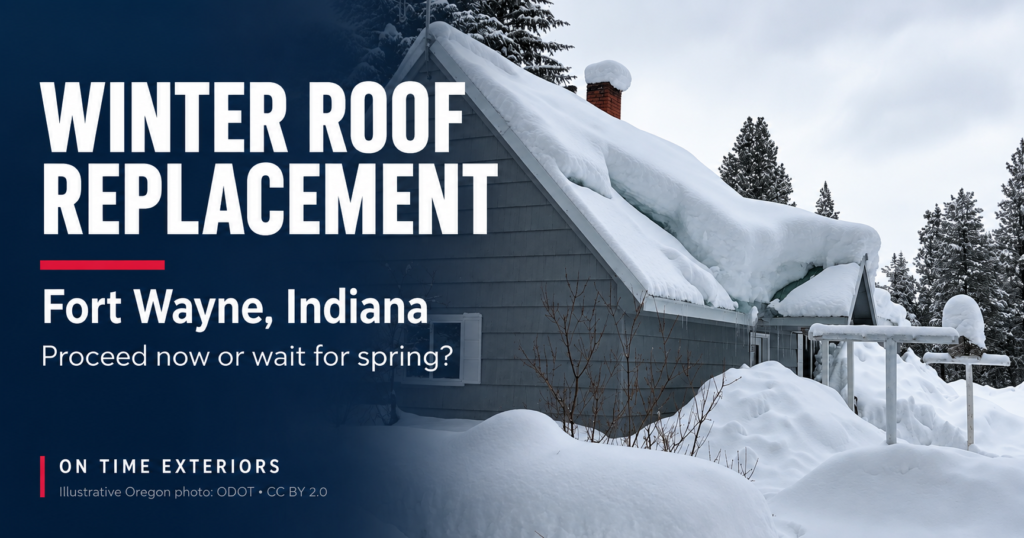
Can you replace an asphalt shingle roof during winter in Fort Wayne? Sometimes, yes. The decision depends on the roof’s condition, a suitable weather window, safe access and the installation instructions for every product being used. A mild afternoon alone does not make a winter roofing project ready to start.
If your roof is leaking, waiting until spring without an inspection can leave the underlying problem unresolved. If the roof is sound and replacement is elective, postponing installation may be reasonable. Here is how to discuss those choices with a roofing contractor before signing a proposal.


When winter roof replacement in Fort Wayne deserves prompt attention
Start with the condition of the house, rather than the calendar. Tell the contractor about recurring leaks, damaged shingles, a recent change in the ceiling or a problem that a previous repair did not resolve. Take photographs from the ground and inside the home. Include when you first noticed the issue and whether it appears during rain, snowmelt or both.
A contractor may recommend a targeted repair, temporary protection or replacement after assessing the damage. These are different scopes of work. Ask what the proposed option addresses, how the roof will be protected while work is pending and what would trigger a new inspection.
Do not assume every winter leak requires a new roof. A flashing defect, condensation or an ice-related drainage problem needs the correct diagnosis. Our roof repair versus replacement guide explains the broader decision; this article focuses on whether cold-weather installation can proceed responsibly.
Is 40°F a hard cutoff for installing asphalt shingles?
There is no single temperature rule that applies to every roof system. In its temperature-extremes technical bulletin, GAF says shingles are easiest to handle above 40°F and that installation in colder conditions requires precautions. Cold shingles can become brittle, and their adhesive may not seal promptly. Hand sealing may be needed according to the manufacturer’s directions.
That guidance is not permission to install any material in any conditions. Ask for the exact shingle model and the current instructions for the underlayment, self-adhered membrane, sealants and accessories. Each component can have its own application requirements. The crew needs a plan for the complete roof assembly.
Useful questions include: Where will materials be stored? How will the crew avoid damaging cold shingles? How will they handle sealing before the weather warms? A clear explanation is more useful than a blanket statement that winter roofing is always fine or always impossible.
What weather conditions should delay a Fort Wayne roofing project?
For an Allen County homeowner, the practical question is whether the available work window suits this roof. Discuss the forecast, the roof’s shade and slope, access around the house and the amount of work that can be completed before conditions change.
GAF’s cool-weather installation guidance calls for a clean, dry deck free of snow and ice, and highlights frost and shorter daylight hours as planning concerns. Cold-weather handling, fastening and sealing require care. Your contractor should explain the stop-work criteria for the selected products and site conditions.
Ask who makes the final decision on the morning of installation. A responsible schedule allows weather delays instead of treating the booked date as a promise to tear off the roof regardless of conditions.
What should roofing contractors include in a winter installation plan?
Before accepting a replacement proposal, request a written scope that answers these questions:
- Roof condition: What was found during the assessment, and why is replacement appropriate now?
- Materials: Which shingles, underlayment, ice barrier, flashing and ventilation components are included?
- Cold-weather method: How will storage, handling, fastening and sealing follow the selected manufacturers’ instructions?
- Open-roof protection: How much will be removed at once, and how will the house be protected if work is interrupted?
- Deck repairs: How will concealed damage be documented, priced and approved before additional work?
- Weather delays: How will schedule changes be communicated, and what happens if the start date moves?
- Final review: What documentation and follow-up will be provided after installation?
For a home inside Fort Wayne, ask whether the proposal includes any required city permits and inspections. For an address elsewhere in Allen County, have the contractor confirm the authority that applies to the property. A postal address by itself does not settle jurisdiction.
Ask for the actual workmanship and product warranty documents rather than assuming the season creates or cancels coverage. Review installation requirements and exclusions with the contractor. Avoid treating an advertised warranty length as a substitute for a sound installation plan.
Can a new roof stop ice dams?
New shingles alone do not correct every cause of ice dams. The Department of Energy’s Building America guidance explains how heat escaping into an attic can melt roof snow that refreezes at colder eaves. Air sealing, insulation and appropriate ventilation work together to reduce the problem. An ice barrier provides added protection against water intrusion, but it does not remove the heat-loss cause.


If you have recurring ice buildup, tell the contractor before choosing the scope. Ask whether an attic assessment is appropriate and who will address any insulation or air-sealing needs. Our roof ventilation guide offers additional background. Keep your own observations on the ground; an icy roof is not a safe place for homeowner inspection.
Should you repair now and replace in spring?
This can be a sensible option when an assessment finds a repairable problem and the roof can be protected until a better installation window. It is less reassuring when the proposal simply postpones an unresolved leak without explaining the protection plan.
Ask the contractor to compare the two scopes: addressing the immediate issue and revisiting replacement, or replacing the roof in a suitable winter window. Request the limitations of any temporary work, the follow-up date and the signs that should prompt an earlier call. Do not assume a temporary repair will last until a particular season.
There is also no reason to assume a winter project automatically costs less. Compare written proposals for the same materials and scope. Any seasonal price difference should be an actual quoted figure, not a general promise.
Choosing roofing companies for a winter project
When comparing local roofing companies, use the consultation to test the plan. Ask the roofer who will inspect the deck, supervise the work and communicate weather delays. Request insurance documentation and ask about any license or registration requirements that apply to your property. If a company advertises a manufacturer certification, verify the specific claim with that manufacturer.
Keep the discussion tied to your roofing materials. This guide concerns asphalt shingles; a metal roof has a different system of panels, fasteners and details. Do not assume the same cold-weather rules apply. Choosing the right roofing professional means getting an explanation of your proposed assembly, not just a general statement about experience.
Ask for necessary repairs and possible additional charges upfront. Written approval procedures help prevent hidden costs from becoming a surprise. A clear scope and responsive communication provide more peace of mind than a promise that winter work will be easier than work in summer.
How can you prepare your house for winter roofing services?
Fort Wayne’s weather can change the work schedule. Ask the crew to identify access routes, material staging and areas that need to remain clear. Tell them about a driveway that becomes icy, landscaping near the house or an entrance that must stay usable. Discuss protection for siding, windows and the gutter system before work begins.
Point out gutter overflow or visible debris from the ground. Ask whether drainage problems need separate attention and whether a gutter can remain in place during the work. A clog and an ice dam are different problems; neither should be treated as proof that shingles alone need replacement. If new gutters are proposed, have their scope listed separately.
Confirm how the crew will protect an unfinished roof if strong winds or winter storms interrupt work. Ask about cleanup and how you will receive completion photographs. If conditions become milder after a delay, let the contractor reassess the site rather than assuming the roof is ready solely because the air feels warmer. Roof condition, dry surfaces and product requirements still matter.
Plan your Fort Wayne roof replacement before the first tear-off
The useful answer is specific to your house: what condition is the roof in, what work is needed and what weather window supports a proper installation? A roof assessment turns those questions into a practical plan.
On Time Exteriors lists Fort Wayne and surrounding Allen County among its service areas. Request a roof inspection to discuss timing and condition, or start a roof quote. You can also call 260-234-3055. Ask about the current schedule and the cold-weather plan for your proposed roof system.